Save up to 20% today!
Dry Flush vs. Composting Toilets: Which One Is Best for RV Life?
This guide breaks down the real-world differences (maintenance, odor, off-grid friendliness, cost, and convenience) so you can confidently choose what fits your RV lifestyle.
2/13/20264 min read
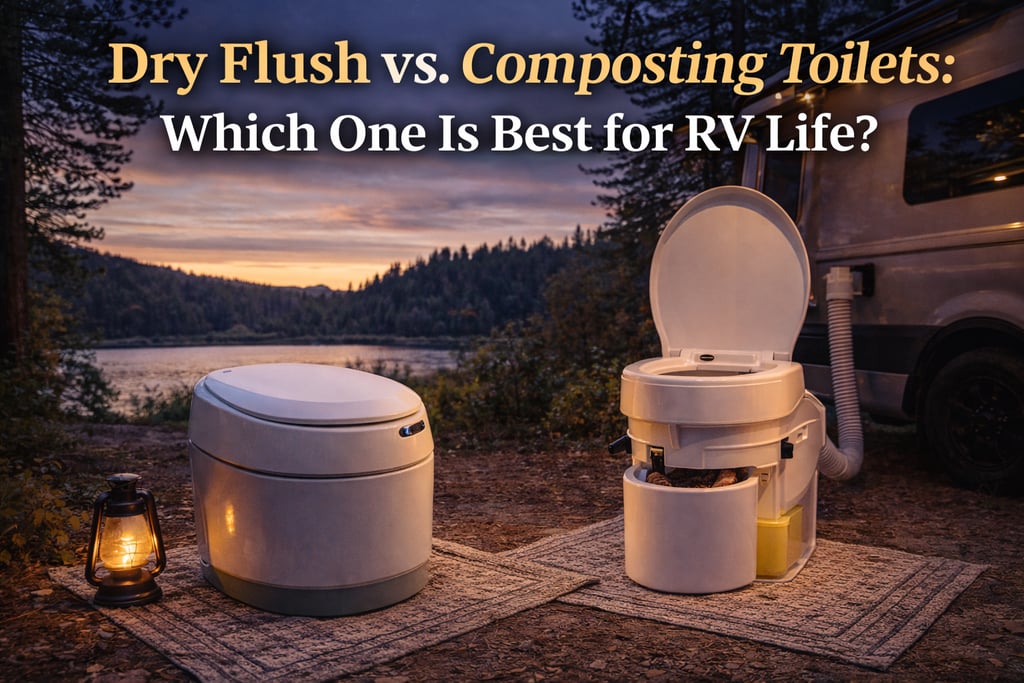
Dry Flush vs. Composting Toilets: Which One Is Best for RV Life?
If you’re researching RV toilet upgrades, you’ll quickly run into two popular “no-traditional-black-tank” options: dry flush toilets and composting toilets. Both can be great choices—but they’re built for different kinds of RVers.
This guide breaks down the real-world differences (maintenance, odor, off-grid friendliness, cost, and convenience) so you can confidently choose what fits your RV lifestyle.
Quick Definitions
What is a Dry Flush Toilet?
A dry flush toilet is waterless and uses a sealing bag system. After use, you press a button (or activate the mechanism) and the toilet wraps/seals waste into a contained bag. No water. No traditional flushing into a black tank.
What is a Composting Toilet?
A composting toilet is also waterless, but it separates or manages waste using a composting medium (often coco coir/peat moss) and requires ventilation to help with moisture control and odor management. It typically has a solids container and a separate urine collection approach.
The Big Differences (In Plain English)
1) Convenience: “Fast and Simple” vs. “Hands-On System”
Dry Flush:
Extremely simple routine: use → press flush → sealed bag
Minimal daily management
Great for guests and families who want “normal” toilet behavior
Composting:
A system you manage over time
Requires learning the routine (separation, mixing, monitoring moisture)
Works best when everyone using it follows the process consistently
Best for you if…
You want low-effort: dry flush
You don’t mind a hands-on setup: composting
2) Odor Control: Sealed Containment vs. Vent + Compost Management
Dry Flush:
Odor control comes from sealing waste immediately
Great for small spaces because smells don’t linger as easily
Composting:
Odor control depends on proper ventilation and correct moisture balance
When used correctly, composting toilets can be low-odor—but if the routine slips, smells can happen
Best for you if…
You want consistent odor control with fewer variables: dry flush
You’re willing to maintain ventilation and routine: composting
3) Off-Grid (Boondocking): Both Are Waterless—But Different Tradeoffs
Both systems help boondockers because they don’t use water to flush. But the “camp longer” benefit comes from different places:
Dry Flush:
Can reduce black tank usage dramatically
Great when you want to avoid dump station stress
Requires enough bags for your trip
Composting:
Designed for long-term off-grid use
Doesn’t require a bag per flush
Requires compost medium and consistent operation
Best for you if…
Your goal is maximum simplicity off-grid: dry flush
You’re off-grid for extended periods and prefer a “systems” approach: composting
4) Installation & Space: Portable Simplicity vs. Built-In Setup
Dry Flush:
Many models are portable and don’t require venting
Easier to set up in a variety of RV layouts
Can work well in travel trailers and smaller rigs where space is tight
Composting:
Often needs a permanent placement
Vent hose and fan are commonly required
Can take more planning and installation effort
Best for you if…
You want plug-and-play flexibility: dry flush
You’re okay installing venting and dedicating space: composting
5) Maintenance: Bag Disposal vs. Emptying and Cleaning Containers
Dry Flush maintenance usually includes:
Disposing of sealed bags properly (follow local rules)
Keeping spare bags stocked
Basic wipe-down cleaning
Composting maintenance usually includes:
Emptying urine container (often frequent depending on use)
Emptying solids container periodically
Replacing compost medium and cleaning components
Managing moisture and airflow
Best for you if…
You want the least “hands-on” maintenance: dry flush
You’re comfortable with regular container management: composting
6) Cost: Ongoing Bags vs. Ongoing Medium (and Possible Install)
Costs vary by brand and usage, but the pattern is typically:
Dry Flush:
Often higher ongoing cost due to refill bags
Usually simpler installation, which may reduce setup costs
Composting:
Lower ongoing consumables cost (compost medium is relatively inexpensive)
Possible added costs for venting, install, and upgrades
Best for you if…
You value convenience and predictability: dry flush
You prioritize lower ongoing consumables and don’t mind the system: composting
Which One Is Best for Your RV Life?
Here’s the easiest way to choose:
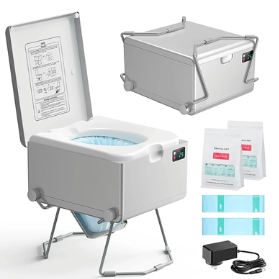
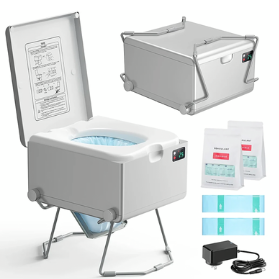
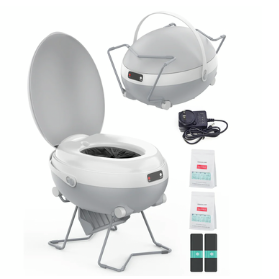
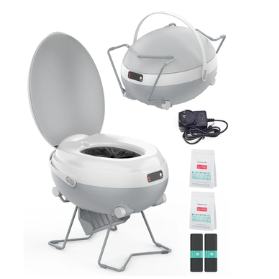
Choose a Dry Flush Toilet if you…
Want the simplest experience: use → press → done
Camp with kids, guests, or groups (easy for everyone)
Hate odor in a small RV space
Want to reduce black tank stress
Prefer minimal maintenance and no “learning curve”
Choose a Composting Toilet if you…
Don’t mind a process and routine
Want a long-term off-grid solution with fewer per-use consumables
Can install or already have ventilation
Are comfortable managing liquids and solids separately
Want a system that can be very effective when used correctly
Real-World Scenarios (Quick Examples)
Weekend Warriors / Travel Trailer Owners:
Dry flush is often the favorite because it’s easy, portable, and guest-friendly.
Full-Time RVers Who Love Systems:
Composting can be a great fit if you don’t mind maintenance and want lower ongoing consumable costs.
Boondockers Who Hate Dump Stations:
Dry flush can feel like freedom—less black tank stress and strong odor control.
People Camping in Cold Weather:
Waterless options are both helpful, but many RVers like dry flush simplicity when winter conditions make everything harder.
The Bottom Line
There’s no single “best” RV toilet for everyone—only the best match for your travel style.
If you want the easiest, cleanest routine with strong odor control, a waterless dry flush toilet is hard to beat.
If you want a long-term system with fewer per-use consumables and don’t mind a learning curve, composting can be a great choice.
At CampingToiletStore.com, we focus on waterless dry flush toilets built for RV and camping life—especially for people who want less hassle and more comfort on the road.
If you want help choosing, consider your camping style (weekends vs full-time, guests vs solo, hookups vs boondocking) and how much daily maintenance you’re willing to handle. That answer usually makes the decision clear.
Camping Toilet Store
Reliable Comfort for Every Adventure.
Contact
Newsletter
info@campingtoiletstore.com
© 2026. All rights reserved.